
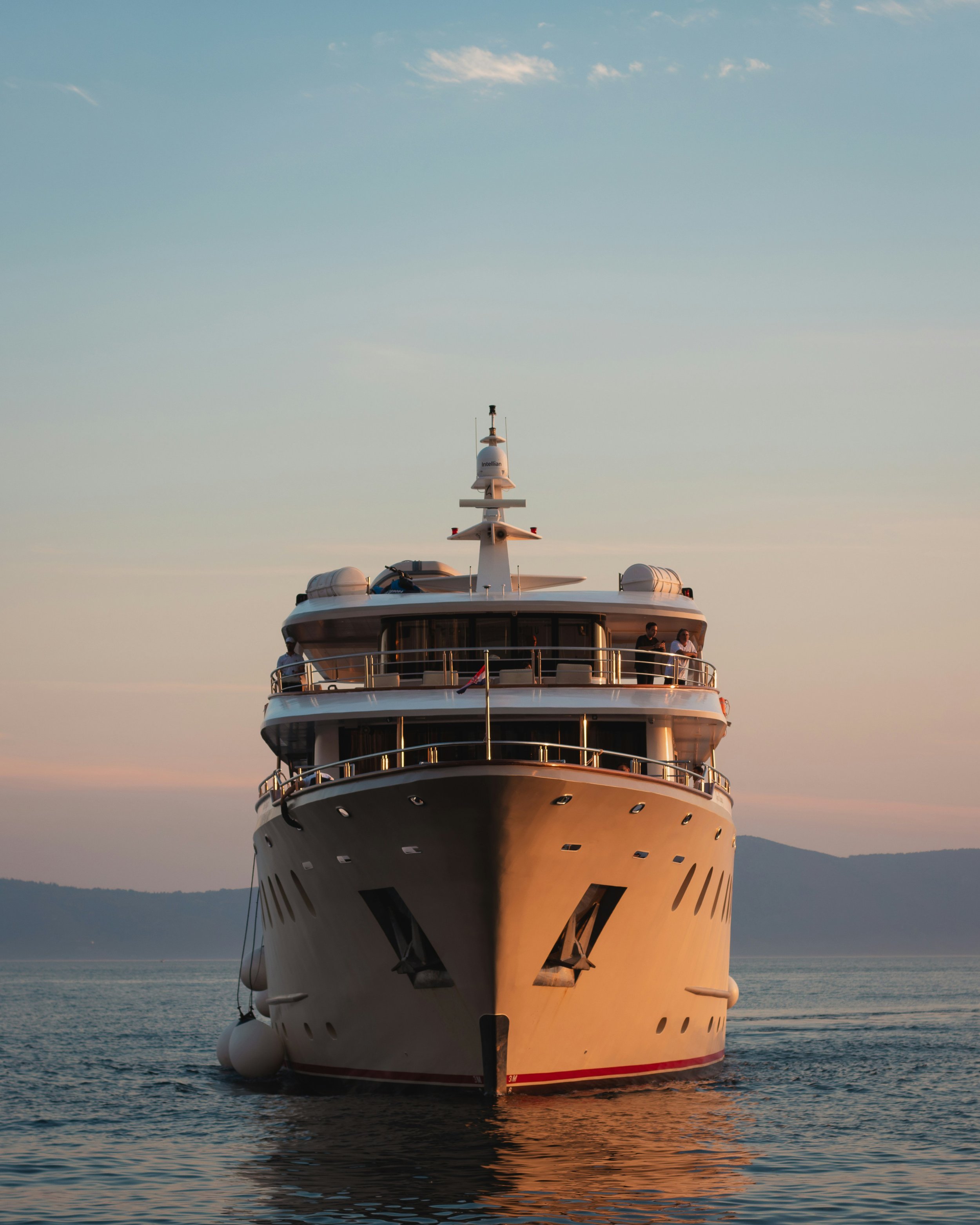
The world, met slowly, by sea.
Luxury cruising isn't a discounted version of travel — it's a different way of arriving. This guide walks through what distinguishes a fine voyage, so you can choose the one that suits how you actually want to see the world.
The luxury tier of cruising diverges from mainstream cruising almost entirely in what it removes, not what it adds. Most cruise marketing sells scale — more decks, more restaurants, more entertainment. Luxury cruising sells the opposite: fewer people, more room, and staff who know your name by the second day. Ships in this tier typically carry 200 to 750 guests, compared to 3,000–6,000 on mainstream ships.
That smaller scale changes the itinerary itself. These ships can dock in harbours the giants can't reach — Portofino instead of a tender to a cruise terminal, Bora Bora's lagoon instead of a distant anchorage — because size dictates access.
What follows in this guide is a practical breakdown: the four things that actually differ, a look at three representative voyages, what's genuinely included versus positioned as an upgrade, and the suite categories worth understanding before you compare quotes.
All-suite accommodation
No interior cabins or view-obstructed rooms exist in this tier — every stateroom has a private veranda or full ocean view.
Inclusive by default
Gratuities, specialty dining, wines, and often shore excursions are folded into the fare rather than sold as add-ons.
Deep-water access
Smaller drafts and tender fleets reach ports and anchorages the larger ships must simply sail past.
A staff-to-guest ratio near 1:1
Service that anticipates rather than responds — the practical result of low guest density.






“Twenty years from now, you will be more disappointed by the things you didn’t do than by the ones you did do. So throw off the bowlines. Sail away from safe harbor. Catch the trade winds in your sails. Explore. Dream. Discover.”